

Commercial Building Renovations: Top 5 Benefits Revealed
Commercial building renovations offer a golden opportunity to transform your space into something more functional, appealing, and valuable. Whether you’re looking to improve energy efficiency, increase property value, or create a more tenant-friendly environment, undergoing a commercial renovation can yield significant benefits.
- Planning is Crucial: Define clear goals and expectations.
- Challenges to Anticipate: Budget management, permitting, design decisions.
- Rewards of Renovation: Improved property value, aesthetic appeal, and long-term savings.
Tackling such projects involves thoughtful planning and navigating challenges like budget constraints and regulatory compliance. However, the rewards—ranging from increased property value to improved tenant loyalty—make it a worthwhile endeavor. By choosing the right professionals and materials, you can ensure a smooth renovation process and maximize the return on your investment.
Understanding Commercial Building Renovations
Commercial building renovations are more than just a facelift; they’re a strategic overhaul of a space used for business purposes. These renovations can transform outdated or inefficient spaces into modern, functional areas that meet the needs of today’s businesses.
Definition
At its core, a commercial building renovation involves updating or altering the interior or exterior of a building used for business activities. This includes offices, retail spaces, restaurants, and medical buildings. The aim is to improve functionality, aesthetics, or adapt the structure for new tenants. Think of it as giving a building a new lease on life, custom to modern demands.
Goals
Before diving into a renovation, it’s crucial to define clear goals. Here are some common objectives for commercial renovations:
- Improve Energy Efficiency: Upgrading HVAC systems, installing LED lighting, or adding insulation can cut energy costs and reduce the building’s carbon footprint.
- Increase Property Value: Enhancing curb appeal and modernizing interiors can boost the building’s market value, making it more appealing to potential buyers or tenants.
- Improve Tenant Experience: A well-renovated space can attract new tenants and retain existing ones by providing a pleasant and efficient environment.
- Adapt to New Functions: Sometimes, a renovation is necessary to attract a different type of business or to accommodate a new tenant’s specific needs.
Types
Commercial renovations come in various forms, each serving different purposes. Here are some common types:
-
Office Renovations: These projects often involve reconfiguring layouts, updating infrastructure, or refreshing common areas to boost employee productivity and morale.
-
Life Sciences Facility Renovations: These spaces require a balance of form and function, with specialized labs and amenities to support innovation and collaboration.
-
Hotel and Hospitality Refurbishments: Frequent updates to guest rooms, lobbies, and amenities ensure guest satisfaction and keep the property competitive.
-
Healthcare Facility Updates: Renovations here focus on advancing technologies and enhancing patient comfort, often involving patient room upgrades or new medical equipment installations.
Understanding the different types of commercial building renovations can help tailor your project to meet specific business needs and ensure compliance with local building codes.
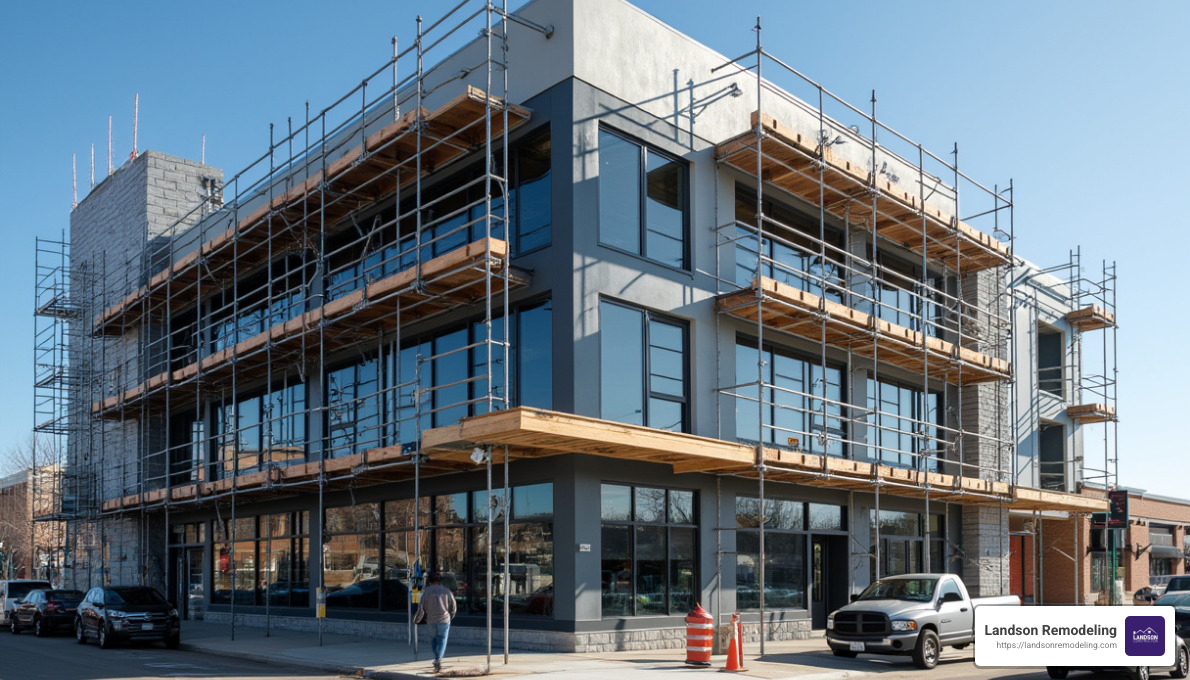
By setting clear goals and understanding the types of renovations available, businesses can better plan their projects and achieve desired outcomes. Next, we will dig into the benefits these renovations can bring to your property.
Benefits of Commercial Building Renovations
Commercial building renovations offer a range of benefits that can significantly improve your property’s value, improve energy efficiency, and attract tenants. Let’s explore these key advantages in detail.
Boosting Property Value
Renovating a commercial building can greatly increase its market value. When you upgrade the appearance and functionality of your building, it becomes more appealing to potential buyers or investors. Improved curb appeal and modernized interiors can lead to a higher asking price if you decide to sell.
Improving Energy Efficiency
Energy efficiency is a crucial consideration in today’s eco-conscious world. By incorporating energy-saving technologies, such as LED lighting, energy-efficient HVAC systems, and proper insulation, you can significantly reduce utility costs. These updates not only benefit the environment but also attract tenants who prioritize sustainability.
A study highlighted in our research found that sustainable renovations can improve a property’s appeal, drawing in tenants and customers who value eco-friendly practices. This focus on sustainability can set your property apart in a competitive market.
Attracting and Retaining Tenants
A well-executed renovation can make your property more attractive to tenants. Modern, efficient spaces with updated amenities can increase tenant satisfaction and reduce turnover. This is especially important in commercial real estate, where tenant loyalty directly impacts rental income.
“Keeping your building functioning properly and updating it with modern appeal will improve tenant loyalty,” according to industry insights. This means fewer vacancies and more stable rental revenue.
Creating Functional and Inviting Spaces
Renovations can transform outdated layouts into functional, inviting spaces that support productivity and well-being. Whether it’s an open office plan that fosters collaboration or a retail space designed to improve customer experience, thoughtful design can make a significant difference.
For example, some companies are investing in renovations to create office environments that feel more like home, complete with amenities such as gyms, outdoor spaces, and modern lobbies. These improvements not only attract tenants but also encourage employees to spend more time in the office.
Conclusion
By enhancing property value, improving energy efficiency, and boosting tenant attraction, commercial building renovations offer a compelling return on investment. In the next section, we’ll explore the steps to ensure a successful renovation project.
Steps to a Successful Commercial Building Renovation
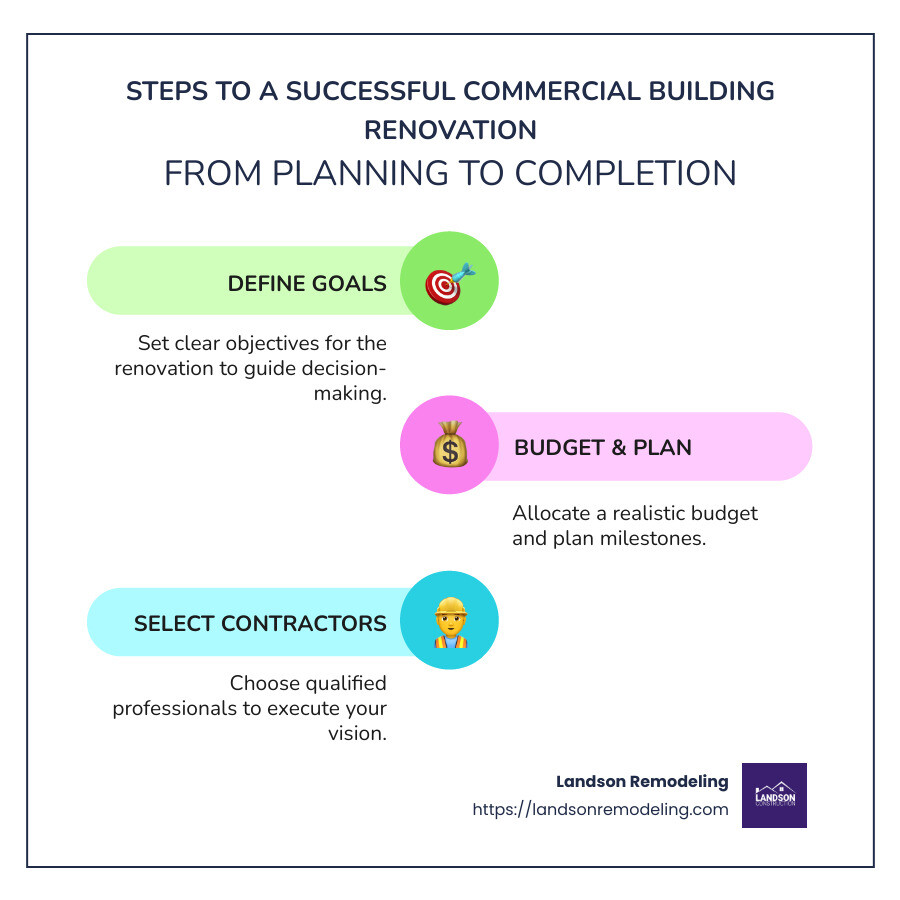
Starting on commercial building renovations requires thorough planning, precise budgeting, and choosing the right team. These steps are crucial to changing your space with confidence.
Planning
Effective planning is the backbone of any successful renovation project. Start by clearly defining your goals. Are you aiming to improve energy efficiency, increase property value, or attract new tenants? Understanding these objectives will guide every decision throughout the renovation process.
Next, conduct a site investigation to assess the current condition of the building. This includes evaluating the structural integrity, electrical systems, and plumbing. Identifying potential hazards or issues early on can save time and money down the line.
Ensure that your plans comply with local building codes and regulations. This step is critical to avoid legal issues or delays once construction begins. Collaborating with architects and designers can help translate your vision into actionable plans that align with your goals.
Budgeting
An accurate budget is essential to keep your project on track financially. Begin by identifying specific cost factors, such as the scope of the project, building quality, and material choices. It’s wise to add a 15% buffer to your budget to cover unforeseen expenses, such as hidden structural issues or supply chain disruptions.
Engage with material suppliers early to mitigate challenges related to material shortages. Choosing quality materials not only ensures durability but can also save money in the long term by reducing the need for repairs and maintenance.
Contractor Selection
Choosing the right contractor is pivotal to the success of your renovation. Consider hiring a local commercial contractor who understands the regional market and has established relationships with local suppliers. This can lead to cost savings and smoother navigation of local permitting processes.
Opt for a design-build firm, which offers the advantage of a centralized team managing every aspect of the project. This approach minimizes communication issues and ensures that the team is experienced in working together to meet deadlines within set budgets.
When evaluating potential contractors, look for those with excellent communication skills, strong organizational abilities, and a track record of successful projects. Client testimonials can provide valuable insights into their reliability and quality of work.
By focusing on careful planning, detailed budgeting, and selecting the right contractor, you set the foundation for a successful commercial building renovation. Next, we’ll dig into key considerations to keep in mind during the renovation process.
Key Considerations for Commercial Building Renovations
When it comes to commercial building renovations, paying attention to a few critical aspects can make all the difference. Let’s explore the key considerations: compliance, sustainability, and material selection.
Compliance
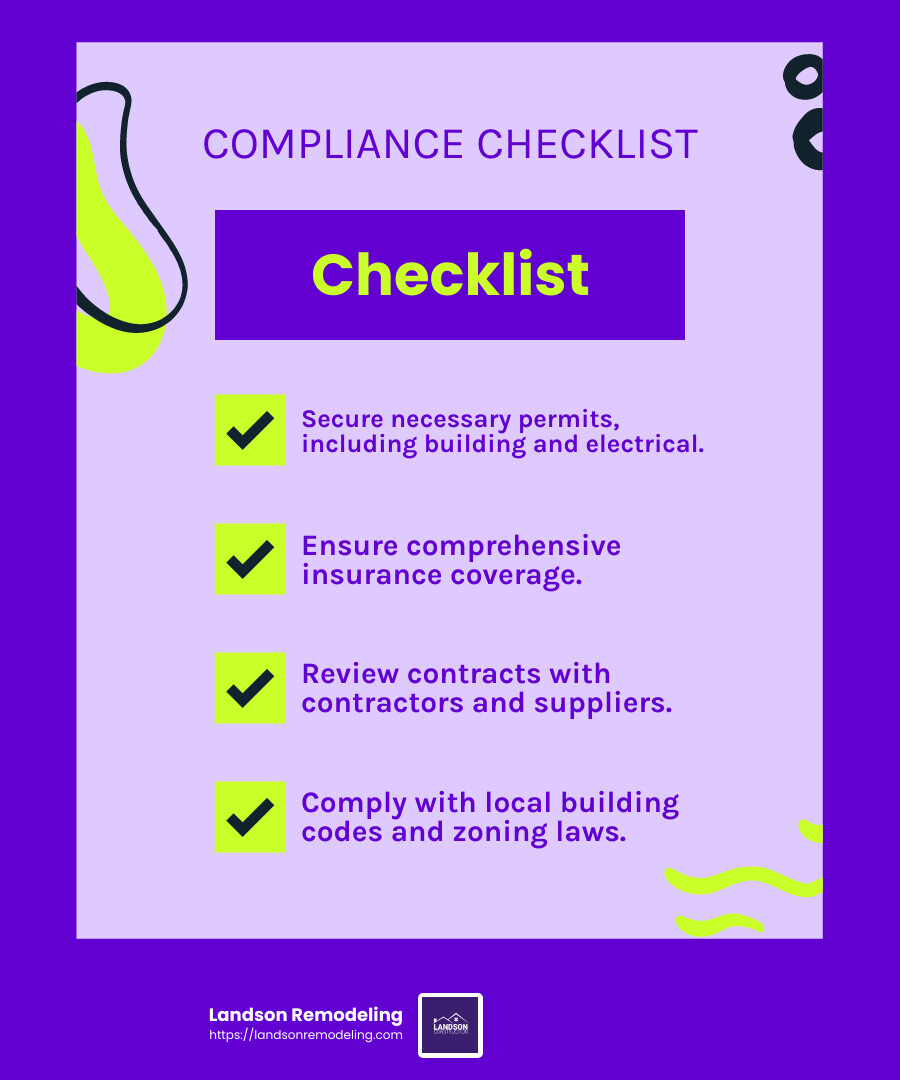
Navigating legal and regulatory requirements is a must. Before swinging that first hammer, ensure all renovation plans comply with local building codes and zoning laws. Ignoring these regulations can lead to costly fines and delays.
- Permits and Approvals: Secure necessary permits before starting. This includes building permits, electrical permits, and any special approvals for historical buildings.
- Insurance: Ensure you have comprehensive insurance coverage to protect against unforeseen incidents and liabilities.
- Contracts: Review all agreements with contractors and suppliers. Clear and legally binding contracts prevent misunderstandings and disputes.
Sustainability
Incorporating sustainable practices isn’t just good for the environment—it’s smart for your bottom line. Energy-efficient upgrades can reduce utility costs and increase property value.
- Energy-Efficient Solutions: Consider LED lighting, energy-efficient HVAC systems, and low-flow plumbing fixtures. These not only save energy but also appeal to eco-conscious tenants.
- Sustainable Materials: Use recycled or sustainably sourced materials. This not only reduces your carbon footprint but can also attract tenants who prioritize green practices.
Sustainable renovations can save between 50% and 75% of embodied carbon emissions compared to new construction, especially when foundations and structures are preserved.
Material Selection
Choosing the right materials is crucial for both aesthetics and longevity. Don’t skimp on quality—investing in durable materials can save you money in the long run.
- Functional Needs: Select materials that align with the functional needs of your space. For example, moisture-resistant drywall in restrooms or fire-resistant options where required.
- Supply Chain: Be aware of supply chain disruptions. Have backup options ready and manage timelines carefully to avoid delays.
- Aesthetic Appeal: While trends are tempting, aim for timeless designs that improve the user experience and boost property value.
By focusing on compliance, sustainability, and thoughtful material selection, you can ensure a smooth and successful renovation process. Up next, we’ll tackle some frequently asked questions about commercial building renovations.
Frequently Asked Questions about Commercial Building Renovations
What is the average cost to remodel a commercial building?
The cost of commercial building renovations can vary widely. On average, you might expect to pay between $50 to $150 per square foot. However, several factors can influence this range:
- Scope of Project: Larger projects with extensive structural changes will cost more.
- Building Quality: Older buildings may require more repairs or upgrades, driving up costs.
- Location: Renovations in urban areas typically cost more due to higher labor and material costs.
- Material and Labor Costs: The choice of materials and the availability and cost of skilled labor can significantly affect the budget.
To avoid budget overruns, it’s wise to add a 15% contingency to cover unforeseen expenses.
How to renovate a commercial building?
Renovating a commercial building involves several key steps:
-
Define Your Goals: Clearly outline what you want to achieve, whether it’s increased energy efficiency, improved aesthetics, or a change in function.
-
Plan Thoroughly: Develop a detailed renovation plan, considering design, timeline, and budget.
-
Hire Professionals: Engage a local commercial contractor with a good track record. A design-build firm can streamline the process by managing all aspects of the project.
-
Secure Permits: Ensure all necessary permits and approvals are in place to avoid legal issues.
-
Manage the Process: Keep communication open with your contractor to stay updated on progress and address any issues promptly.
-
Incorporate Sustainability: Integrate energy-efficient systems and sustainable materials to improve ROI and appeal to eco-conscious tenants.
What’s the difference between refurbishment and renovation?
While often used interchangeably, refurbishment and renovation have distinct meanings:
-
Refurbishment: This involves updating or refreshing a building without making major structural changes. Examples include repainting, replacing fixtures, or updating finishes.
-
Renovation: This is more extensive and may involve altering the structure, layout, or function of a space. For instance, changing office cubicles into open workspaces or reconfiguring a restaurant layout.
Understanding these differences helps in setting realistic expectations and planning effectively for your commercial building renovations.
Next, we’ll conclude by highlighting how Landson Remodeling’s expertise and client-focused approach can support your renovation journey.
Conclusion
At Landson Remodeling, we understand that starting on commercial building renovations is a significant decision. Our expertise in changing spaces is built on years of experience and a commitment to excellence. We specialize in a range of services, from kitchen and bath remodels to full home and commercial renovations. Our team is dedicated to delivering quality results that meet your specific needs and exceed expectations.
Expertise You Can Trust
Our approach to renovation is simple yet effective. We prioritize clear communication, meticulous planning, and high-quality craftsmanship. Our 3D design services allow you to visualize your project before it begins, ensuring that every detail aligns with your vision and goals. This dedication to precision and client satisfaction sets us apart in the remodeling industry.
Client Support Every Step of the Way
We believe that successful renovations are built on strong client relationships. From the initial consultation to project completion, we provide personalized support to guide you through every stage of the process. Our team listens carefully to your needs, offering custom solutions that reflect your style and budget.
Whether you’re looking to improve energy efficiency, improve aesthetics, or increase property value, our team is ready to help you transform your space with confidence. We invite you to explore our services and find how Landson Remodeling can make your renovation dreams a reality.
In conclusion, choosing Landson Remodeling means choosing a partner committed to delivering excellence and ensuring your commercial renovation project is a seamless and rewarding experience. Let’s create something extraordinary together.


