

Full Home Renovation Project: 7 Powerful Cost Truths 2025
Understanding the Full Home Renovation Journey
A full home renovation project typically costs between $19,500 and $87,000, with the average price ranging from $10 to $60 per square foot. Costs can rise to $100,000-$200,000 for high-end renovations, and major structural changes may exceed these figures.
| Renovation Scope | Average Cost | Timeline |
|---|---|---|
| Basic Renovation | $19,500-$45,000 | 2-4 months |
| Mid-range Renovation | $45,000-$87,000 | 3-6 months |
| High-end Renovation | $87,000-$200,000+ | 4-8+ months |
Tackling a whole-house renovation is both exciting and intimidating. Whether you’re updating a 1970s bungalow or changing your forever home, the process involves careful planning, budgeting, and coordination.
“Tackling a whole home renovation is not for the faint of heart. This is a project that for many people will be a once-in-a-lifetime experience,” notes one renovation expert. This sentiment captures why proper planning is critical to success.
When considering a full renovation, homeowners typically have three main goals:
1. Improving functionality and flow
2. Updating outdated systems and aesthetics
3. Increasing home value and comfort
Most professionals recommend a 10-20% contingency fund above your estimated budget to handle unexpected issues. These commonly arise when opening walls or addressing older home systems.
Living in your home before renovating can help you better understand how you use the space, allowing for more thoughtful planning around traffic patterns, natural light, and daily routines.
Simple guide to full home renovation project terms:
– average cost of full kitchen renovation
– bathroom full renovation
– house renovation price
What Does a Full Home Renovation Project Include?
A full home renovation project goes far beyond simply updating a room or two. It’s a comprehensive change that breathes new life into your entire living space.
When we talk with homeowners about renovations, many are surprised by just how extensive these projects can be. Your renovation will likely include structural changes like removing walls to create open-concept spaces or reinforcing foundations. It will also involve updating all mechanical systems—your electrical wiring, plumbing, and HVAC systems—to meet current codes and efficiency standards.
Inside, you’ll see dramatic changes with new flooring, fresh drywall, paint, trim, and fixtures throughout. Kitchens and bathrooms typically receive the most attention, with complete overhauls of cabinets, countertops, and fixtures. Many homeowners also opt for exterior updates including new siding, roofing, windows, and doors to improve both appearance and energy efficiency.
One of our Bloomington clients put it perfectly: “I thought we were just updating the kitchen and bathrooms, but once we started looking at the electrical panel and outdated plumbing, we realized everything needed to be brought up to code.” This is a common realization when renovating older Minnesota homes.
At Landson Remodeling, we coordinate all the necessary professionals—architects, engineers, plumbers, electricians, and specialized tradespeople—to ensure your renovation proceeds smoothly from start to finish.
Typical Order for a Full Home Renovation Project
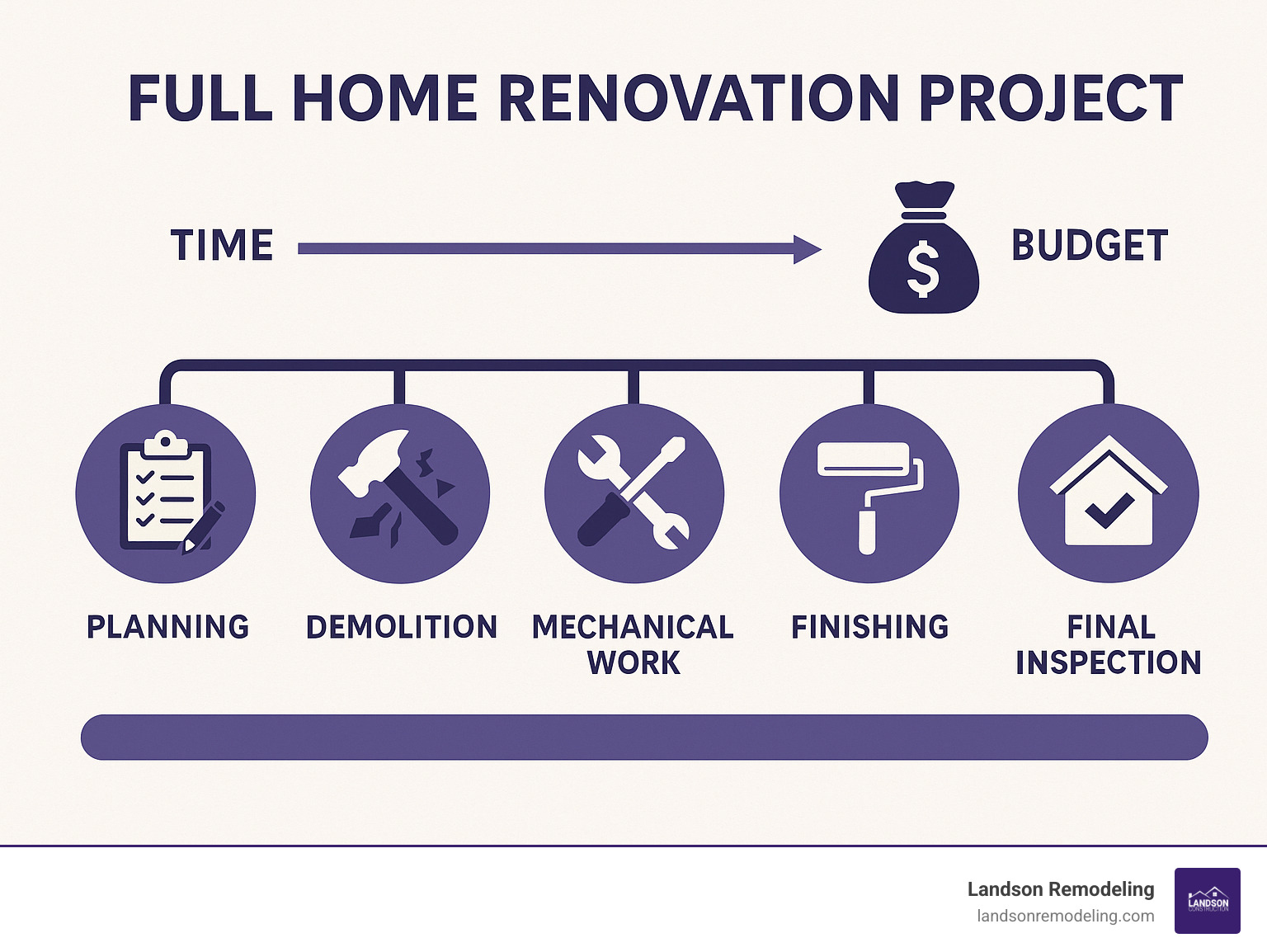
A full home renovation project follows a logical sequence that maximizes efficiency and prevents damage to completed work. The journey typically unfolds like this:
We begin with planning and design, creating detailed blueprints and securing necessary permits. Next comes demolition, where we remove old fixtures, finishes, and sometimes walls to create a clean slate.
Structural work follows, addressing any foundation issues or changing the layout of your space. Then comes the “rough-in” phase—updating electrical, plumbing, and HVAC systems while walls are open. This is followed by insulation and drywall installation, which seals your home and creates finished wall surfaces.
Next, we install new doors and windows for improved efficiency and aesthetics, followed by flooring throughout the home. Cabinetry and countertops go in afterward, creating beautiful and functional spaces in your kitchen and bathrooms.
The final touches include installing fixtures and hardware—lighting, plumbing fixtures, doorknobs—before painting and adding finishing details. We wrap up with a final inspection and thorough cleanup.
As renovation expert Elizabeth Dodson notes, “Where you start your home remodel depends on what’s important to you as a homeowner and how much you want to spend.” However, following this sequence minimizes rework and protects newly completed elements.
Full Home Renovation Project Timeline
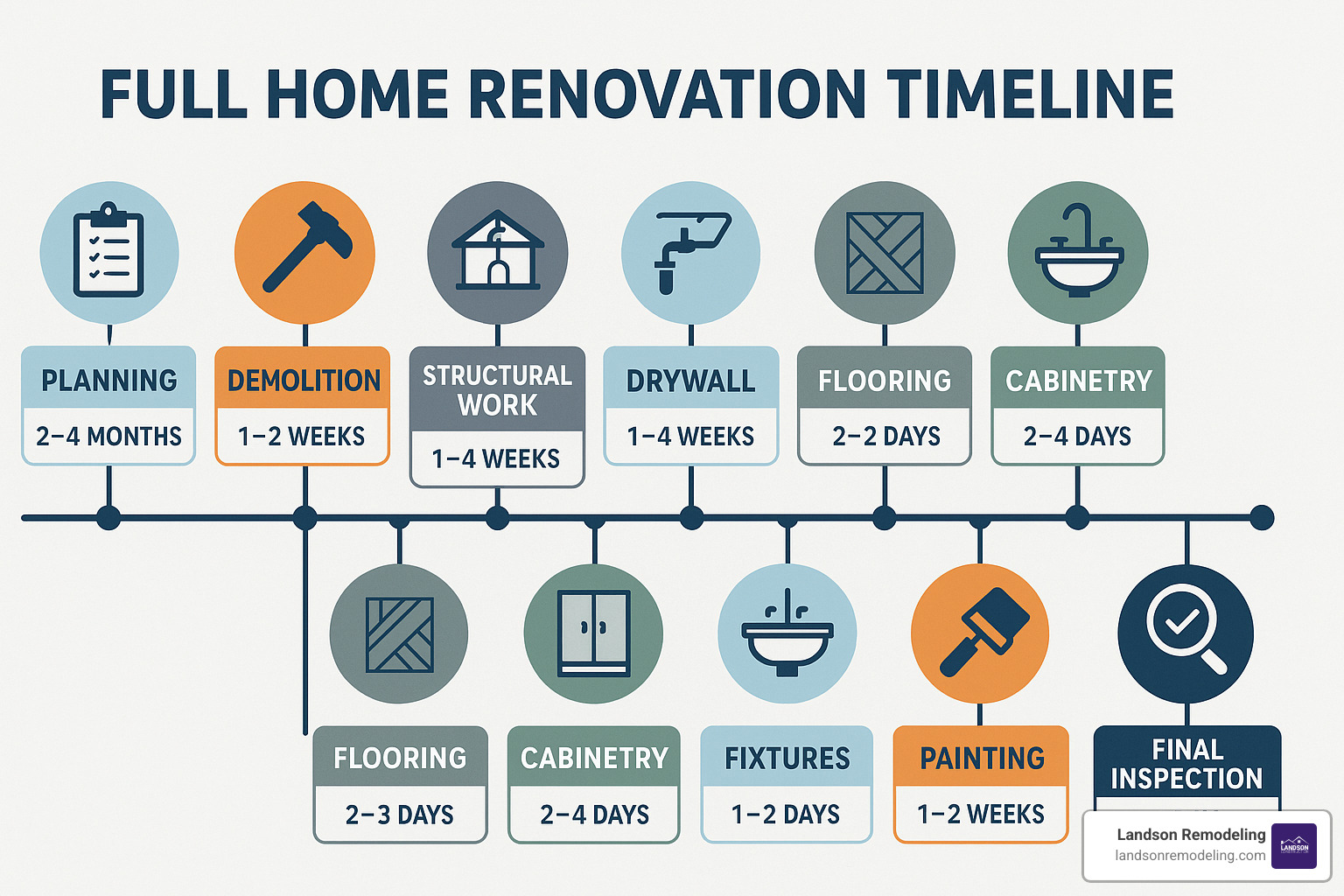
How long will your renovation take? The timeline for a full home renovation project varies based on several factors, but here’s what you can typically expect:
Small homes under 1,200 square feet usually take 2-4 months from start to finish. Medium homes between 1,200-2,500 square feet generally require 3-6 months, while larger homes over 2,500 square feet might need 6-12+ months for a complete renovation.
Individual project phases have their own timelines too. A kitchen remodel typically takes 3 to 12 weeks depending on complexity. Bathroom renovations average about 3 weeks, while adding a new room might require 6 to 12 weeks. Basement finishing typically takes about 3 weeks, and replacing a roof can be completed in about 2 days in good weather.
Several factors can extend these timelines, and we’re always transparent about them. Permit delays are common, especially during busy seasons when municipal offices face backlogs. Material availability can be unpredictable, with supply chain issues occasionally delaying specific items. Weather conditions play a significant role, particularly for exterior work in Minnesota’s varied climate.
Unexpected findies like asbestos, lead paint, or structural issues can also add time, as can change orders when homeowners request modifications during the project. At Landson Remodeling, we build buffer time into our schedules to accommodate these potential delays, ensuring you have realistic expectations throughout the process.
Full Home Renovation Cost Breakdown & Key Factors
The cost of a full home renovation project can feel like a moving target. Let’s break down what really influences your bottom line so you can create a realistic budget without those dreaded surprise expenses.
Cost Breakdown by Category
When planning your renovation budget, understanding where your money goes helps you make smarter decisions about where to splurge and where to save:
| Renovation Element | Percentage of Budget | Average Cost Range |
|---|---|---|
| Labor | 30-35% | $15,000-$50,000 |
| Materials | 45-50% | $20,000-$100,000 |
| Design & Permits | 5-10% | $2,500-$10,000 |
| Fixtures & Finishes | 10-15% | $5,000-$30,000 |
| Contingency | 10-20% | $5,000-$40,000 |
Key Cost Factors
Your renovation costs don’t just depend on what you want—they’re shaped by several key factors that might not be immediately obvious.
First, square footage plays a huge role. It’s simple math: bigger homes need more of everything. Expect to pay anywhere from $10 to $150 per square foot depending on how fancy you want to get with finishes.
The age of your home can dramatically impact your budget too. We’ve worked with many Minnesota homeowners who were surprised when their charming 1920s craftsman needed complete electrical rewiring. Homes built before 1978 might need lead paint removal, while those mid-century gems from the 50s-70s could be hiding asbestos in the insulation or flooring.
How deep you’re diving also matters. A gut renovation (where we take everything down to the studs) will naturally cost much more—think $60-$150 per square foot—compared to simply refreshing surfaces and fixtures.
Your choice of materials can easily double or triple your costs. While vinyl flooring might run $2-5 per square foot, those gorgeous hardwood floors you’ve been dreaming about could cost $10-25 per square foot. The same applies to countertops—basic laminate might cost $20-50 per square foot, while that stunning quartz island could command $75-200 per square foot.
Labor rates vary widely across Minnesota, with specialized trades like electricians and plumbers commanding premium rates compared to general labor. And speaking of location, expect to pay more in the Minneapolis-St. Paul metro area than in smaller communities like Rochester or Duluth.
Most Expensive Rooms to Renovate
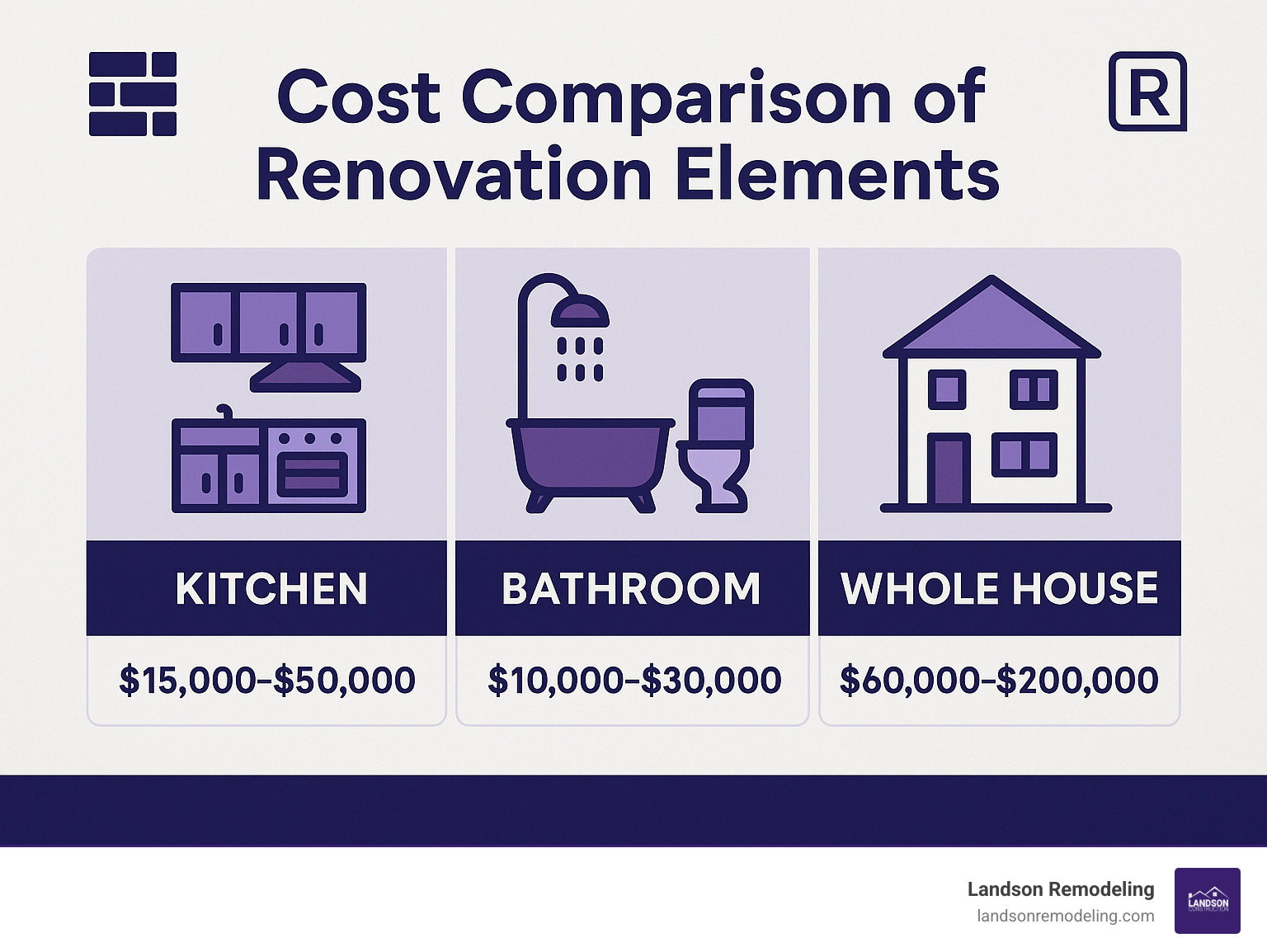
Not all spaces in your home cost the same to renovate. Your kitchen will typically be your biggest investment at $10,000-$50,000 because of all the moving parts—cabinetry, appliances, plumbing, electrical, and countertops. In upscale neighborhoods like Edina or Maple Grove, we’ve seen high-end kitchens easily exceed $75,000.
Bathrooms follow closely behind at $9,000-$20,000 each. All that tile work, plumbing, and fixtures add up quickly. One of our clients in Minnetonka initially balked at her master bathroom estimate, but later told us, “Having a spa-like retreat at home has been worth every penny of that $35,000.”
Basement finishing typically runs $12,300-$33,300, depending on whether you’re adding plumbing for a bathroom or bar area. Room additions are another big-ticket item at $20,000-$75,000 since you’re essentially building a mini-house with foundation, framing, roofing, and all interior elements.
Even living rooms, which are generally less expensive at $5,000-$10,000, can become costly projects if you’re adding custom built-ins, a statement fireplace, or architectural details like coffered ceilings.
We recently worked with a family in Eden Prairie who had budgeted $30,000 for their kitchen renovation. After falling in love with custom cabinetry and professional-grade appliances, they ended up investing $45,000. Their feedback? “The difference in quality and functionality was worth every penny.”
Regional, Size & Age Variations
Where you live in Minnesota significantly impacts your renovation costs. The Twin Cities Metro area typically runs 10-15% higher than national averages due to higher labor rates and permit costs. Suburban areas like Plymouth, Woodbury, and Eden Prairie tend to be slightly more affordable than urban centers but still pricier than rural areas. If you’re in rural Minnesota, you might save 10-20% compared to metro prices, though material delivery can add unexpected costs.
Your home’s age is another crucial cost factor. Pre-1950s homes often need extensive electrical upgrades (replacing old knob-and-tube wiring), plumbing updates (swapping cast iron for PVC), and possibly lead paint removal. Homes from the 50s-70s might have asbestos concerns, outdated electrical panels, and less efficient layouts that need reconfiguring.
Even homes from the 80s and 90s typically need layout updates to create the open concepts popular today, along with kitchen modernization and energy efficiency improvements. Newer homes built after 2000 generally require fewer structural changes but may need style updates as design trends evolve.
We recently renovated a historic home in St. Paul that cost nearly 40% more than a similar-sized 1990s home in Brooklyn Park. The difference? Preservation requirements, infrastructure updates, and the careful work needed to maintain the home’s character while bringing it into the 21st century.
For more detailed information on how renovation costs vary by project, check out the annual Cost vs. Value Report which provides region-specific data on renovation returns on investment.
Planning, Budgeting, Financing & Contractor Selection
Planning is the foundation of every successful full home renovation project. The time you invest in careful preparation often determines whether your renovation becomes a dream come true or a budget-draining nightmare.
Creating a Realistic Budget
Building an accurate budget isn’t just about ballpark figures—it requires diving into the details of both obvious and hidden costs. Start by creating a comprehensive scope worksheet listing every room you plan to renovate and specific changes you envision, from moving plumbing fixtures to adding windows. This helps separate your must-haves from nice-to-haves when tough budget decisions arise.
Getting hands-on with your research makes a huge difference. Visit local showrooms to touch and feel materials rather than just browsing online. Gather sample quotes for major items and compare good-better-best options to understand where your money goes furthest.
“You don’t know what you don’t know until you open up the walls,” is wisdom we share with all our clients. This reality is why contingency funds aren’t optional—they’re essential. For newer Minnesota homes, set aside at least 10% beyond your estimate. Older homes warrant 15-20%, while historic properties often need 25% or more for unexpected surprises.
Don’t forget to factor in where you’ll live during extensive renovations. Will you need a short-term rental? Storage fees for furniture? Extra budget for restaurant meals when your kitchen is unusable? These temporary living costs can add thousands to your bottom line.
Many of our clients find it helpful to use a home renovation cost estimator template to track expenses and make adjustments as their project evolves. This simple tool helps prevent the all-too-common “budget creep” that can derail even well-planned renovations.
Financing Your Remodel
Most homeowners don’t have enough cash sitting around to fund a complete home change, and that’s perfectly normal. Fortunately, several financing options can make your renovation dreams possible.
Cash or savings offers the simplest approach with no interest costs, but depleting emergency funds isn’t always wise. Many of our Minnesota clients find a Home Equity Line of Credit (HELOC) provides the perfect balance of flexibility and favorable terms. With a HELOC, you can draw funds as needed throughout your project, and the interest is often tax-deductible. The home equity line of credit guide provides a detailed overview of how these loans work.
For more extensive renovations, a cash-out refinance replaces your existing mortgage with a larger one, often at a fixed interest rate. While this restarts your mortgage term, it can provide substantial renovation funds in one lump sum.
Government-backed options like the FHA 203(k) Rehabilitation Loan combine purchase and renovation costs with a lower down payment (just 3.5%), making them ideal for first-time buyers taking on fixer-uppers.
Don’t overlook energy efficiency rebates from utility companies, historic preservation tax credits, or local government home improvement grants. One of our Bloomington clients combined a HELOC with energy rebates from their utility company, saving nearly $3,000 on high-efficiency windows and HVAC upgrades.
Selecting Pros vs. DIY
The DIY approach can be tempting for budget-conscious homeowners, but knowing where to draw the line is crucial for both safety and quality. Painting, simple backsplashes, cabinet hardware replacement, and basic landscaping often make excellent DIY projects for those with appropriate skills and tools.
However, industry data shows more than 30% of professional remodeling jobs stem from failed DIY attempts—a statistic that should give pause to even the most confident weekend warriors. Electrical work, plumbing beyond simple fixture swaps, structural changes, roofing, and complex tile work almost always warrant professional expertise.
“Even skilled DIYers should call in professionals for plumbing and electrical work,” is advice we share regularly. Beyond the safety concerns, professional work comes with warranties and often meets higher standards that protect your home’s value.
The Better Business Bureau hiring tips provide excellent guidance on finding trustworthy professionals for the aspects of your renovation that exceed your comfort zone or legal DIY boundaries.
How to Choose the Right Contractor
Selecting the right contractor for your full home renovation project might be the single most important decision in your renovation journey. The relationship you build with your contractor will determine not just the quality of work but also your stress level throughout the process.
Start by verifying credentials—check licensing with the Minnesota Department of Labor and Industry and confirm insurance coverage that protects both you and workers on your property. Review Better Business Bureau ratings and complaint history to spot potential red flags.
Past work speaks volumes about what you can expect. Ask for references from similar projects—not just any projects—and take the time to visit completed renovations if possible. Detailed portfolios with before/after photos help you visualize a contractor’s capabilities.
Pay close attention to communication style during your initial interactions. Do they respond promptly? Explain processes clearly? Listen to your concerns and ideas? These early signals often predict how the relationship will unfold during your project.
When comparing bids, look beyond the bottom line. Detailed line-item breakdowns provide transparency that lump-sum estimates can’t match. Understand what’s excluded and what triggers extra charges before signing anything.
“Get project scope and costs in writing, including any cooling-off clause,” protects both you and your contractor from misunderstandings. A thorough contract should outline the payment schedule (avoid large upfront payments), change order process, warranty terms, and timeline provisions.
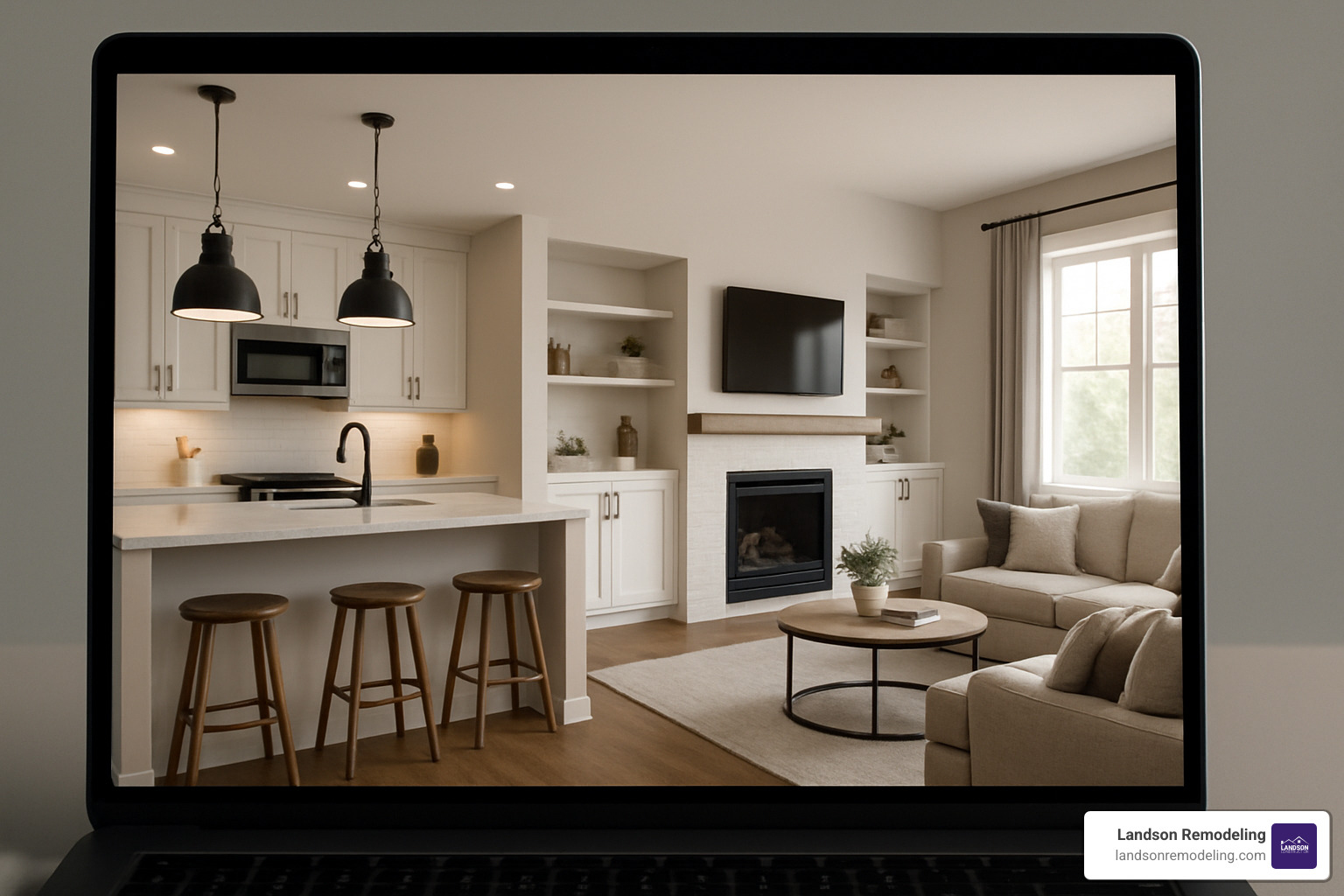
At Landson Remodeling, our Full Home Renovations service includes 3D design visualization so clients can see exactly what they’re getting before construction begins. This extra step eliminates surprises and ensures everyone shares the same vision.
Hidden Costs, Safety Issues, and Maximizing ROI
Every full home renovation project comes with its share of surprises, even with meticulous planning. Understanding what might be lurking behind those walls can save you headaches and protect your investment.
Safety & Permits
When it comes to your family’s safety, cutting corners isn’t an option during renovation.
Older homes often harbor hidden hazards. If your home was built before 1978, you’re likely looking at lead paint concerns. Testing costs between $200-$400, but it’s money well spent. One Minneapolis family told us they initially planned to sand their old woodwork themselves, not realizing they were about to create dangerous lead dust throughout their home.
“Always pull permits for structural, electrical, plumbing, and mechanical work,” a Hennepin County building official recently told me. “It’s not just about compliance—it’s about ensuring your family’s safety.”
Asbestos is another silent danger, particularly in homes built between the 1940s and 1970s. You might find it hiding in popcorn ceilings, vinyl flooring, insulation, or siding. Professional testing runs $250-$800, with removal by certified professionals costing $20-$65 per square foot. It’s pricey, but proper removal prevents potentially devastating health consequences.
Permit requirements vary significantly across Minnesota communities. Minneapolis has entirely different requirements than Eden Prairie or Maple Grove. Typical costs include:
- Building permits: $500-$2,000 depending on project scope
- Electrical permits: $50-$500
- Plumbing permits: $50-$500
- HVAC permits: $250-$400
At Landson Remodeling, we handle all permit applications for our clients, navigating the sometimes confusing municipal requirements so you don’t have to.
Common Hidden Costs
What lies beneath those floors and behind those walls? Often, it’s unexpected expenses.
Structural surprises top the list of renovation shockers. A Lakeville homeowner shared their story: “We budgeted for new kitchen cabinets, but when the contractor removed the old ones, we finded termite damage in the floor joists. Our $30,000 kitchen suddenly needed another $8,000 in structural repairs.”
Water damage and mold remediation can quickly add $500-$6,000 to your budget, not including replacement of affected materials. One St. Paul client finded black mold behind their shower walls, requiring extensive remediation before their bathroom renovation could continue.
Outdated systems frequently demand attention during renovations. A 1920s home in St. Paul revealed knob-and-tube wiring during a kitchen update. “What started as a $30,000 kitchen remodel became a $45,000 project once we had to rewire everything,” the homeowner explained. “But now we have peace of mind knowing our home is safe.”
Electrical panel replacements run $1,500-$4,000, while whole-house rewiring costs about $6-$10 per square foot. Plumbing pipe replacement, particularly in older homes with galvanized or lead pipes, can add $2,000-$15,000 to your renovation.
Code compliance updates often catch homeowners by surprise. Modern building codes may require egress windows ($1,000-$5,000 each), updated smoke detector systems ($500-$2,000), or railing and stair modifications ($1,000-$4,000).
Material prices have been particularly volatile in recent years. Lumber prices can swing dramatically, and supply chain issues might force you to choose alternative materials or pay premium prices for what you originally specified.
Boosting Return on Investment
Not all renovation dollars deliver equal value. Smart choices can maximize your return when it’s time to sell.
Garage door replacement tops the ROI charts at an impressive 147% return. It’s relatively affordable and dramatically improves curb appeal. Manufactured stone veneer (95% ROI) and minor kitchen remodels (85% ROI) also deliver excellent returns.
“Renovating an entire home will cost, on average, $10–$60 per square foot. However, focusing on key areas with high visual impact can maximize your return,” notes a real estate appraiser with experience throughout Minnesota.
Curb appeal investments nearly always pay off. A fresh front door, updated exterior paint, and thoughtful landscaping create that crucial positive first impression. One Edina client invested $15,000 in exterior improvements and believes it added $30,000 to their home’s value.
System updates might not be glamorous, but they matter to buyers. Modern HVAC, updated electrical, and new plumbing provide peace of mind to potential purchasers. Energy efficiency improvements like high-efficiency windows, improved insulation, and smart home technology increasingly influence buying decisions.
When making design choices, timeless trumps trendy. Neutral color palettes, classic architectural details, and flexible floor plans appeal to the widest range of buyers. Bold design choices might suit your personal taste but could limit your home’s appeal when it’s time to sell.
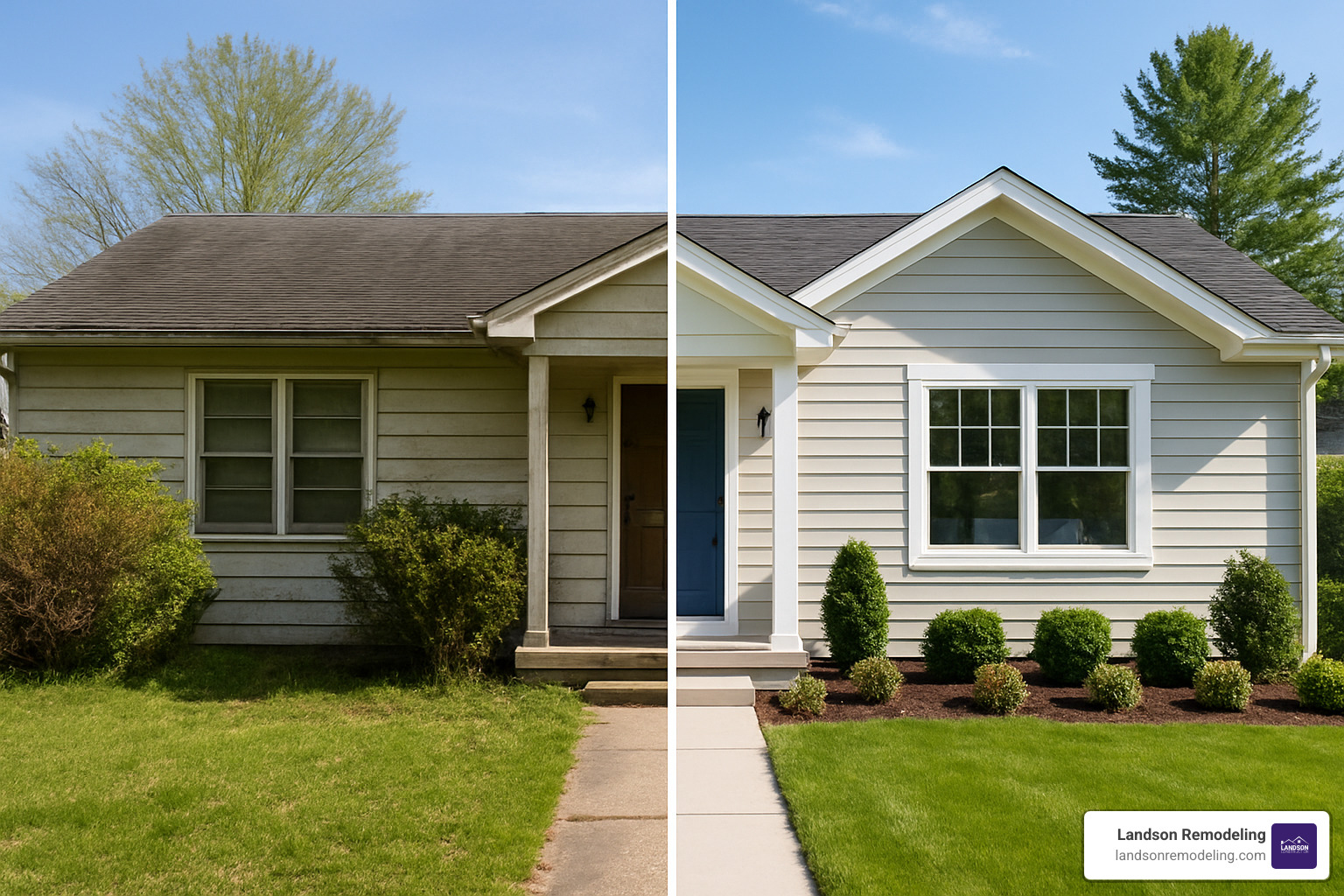
Our Before and After Home Renovations page showcases changes that have significantly increased both home value and owner satisfaction.
Conclusion
A full home renovation project represents a significant investment of time, money, and emotional energy—but the results can be truly transformative when done right. After helping hundreds of Minnesota homeowners reimagine their spaces, we’ve learned that the journey from “before” to “after” depends on thoughtful planning, honest budgeting, and partnerships with professionals who truly care about your vision.
Turning an outdated house into your dream home involves countless decisions—from which walls can safely come down to selecting the perfect cabinet hardware that you’ll touch every day. Each choice impacts both your daily experience and your home’s long-term value.
Think of renovation like telling your home’s next chapter. The best stories have solid foundations, careful planning, and attention to detail. They also have plot twists—those unexpected moments when removing a wall reveals outdated wiring or when your contractor finds beautiful hardwood floors hiding under old carpet.
As you plan your renovation journey, keep these essential insights in mind:
Budget with breathing room. That 15-20% contingency fund isn’t just a suggestion—it’s your safety net when the unexpected happens (and in renovation, it almost always does). One Minneapolis client told us, “That contingency fund saved our sanity when we finded our bathroom subfloor needed replacing.”
Structure before style. While new backsplash tile is exciting, ensuring your foundation is sound and your electrical system is safe provides peace of mind that lasts decades. Beautiful spaces need good bones.
Think holistically about flow. How you move through your home matters as much as how it looks. Consider sightlines between spaces and how natural light travels throughout the day.
Invest where it counts. Quality craftsmanship and durable materials in high-use areas like kitchens and bathrooms will reward you daily. As one of our St. Paul clients put it, “I smile every morning when I open those soft-close drawers—worth every penny.”
Choose your renovation partners wisely. Look beyond the lowest bid to find professionals who communicate clearly, solve problems creatively, and treat your home with respect.
At Landson Remodeling, we understand that your home is more than just a building—it’s where your life happens. Our team approaches each renovation with care, creativity, and commitment to excellence. From our 3D design services that help you visualize your space before the first wall comes down to our personalized support throughout construction, we’re dedicated to changing your renovation vision into your daily reality.
Whether you’re planning a kitchen update, bathroom refresh, or complete home change anywhere in Minnesota—from Edina to Rochester, Duluth to Woodbury—we’re here to guide you through every step of the process.
Ready to write your home’s next chapter? Learn more about our remodeling services or contact us today for a consultation. Your dream home isn’t just a possibility—it’s a project away.


