

Retail Store Redesign: Top 10 Powerful Success Tips
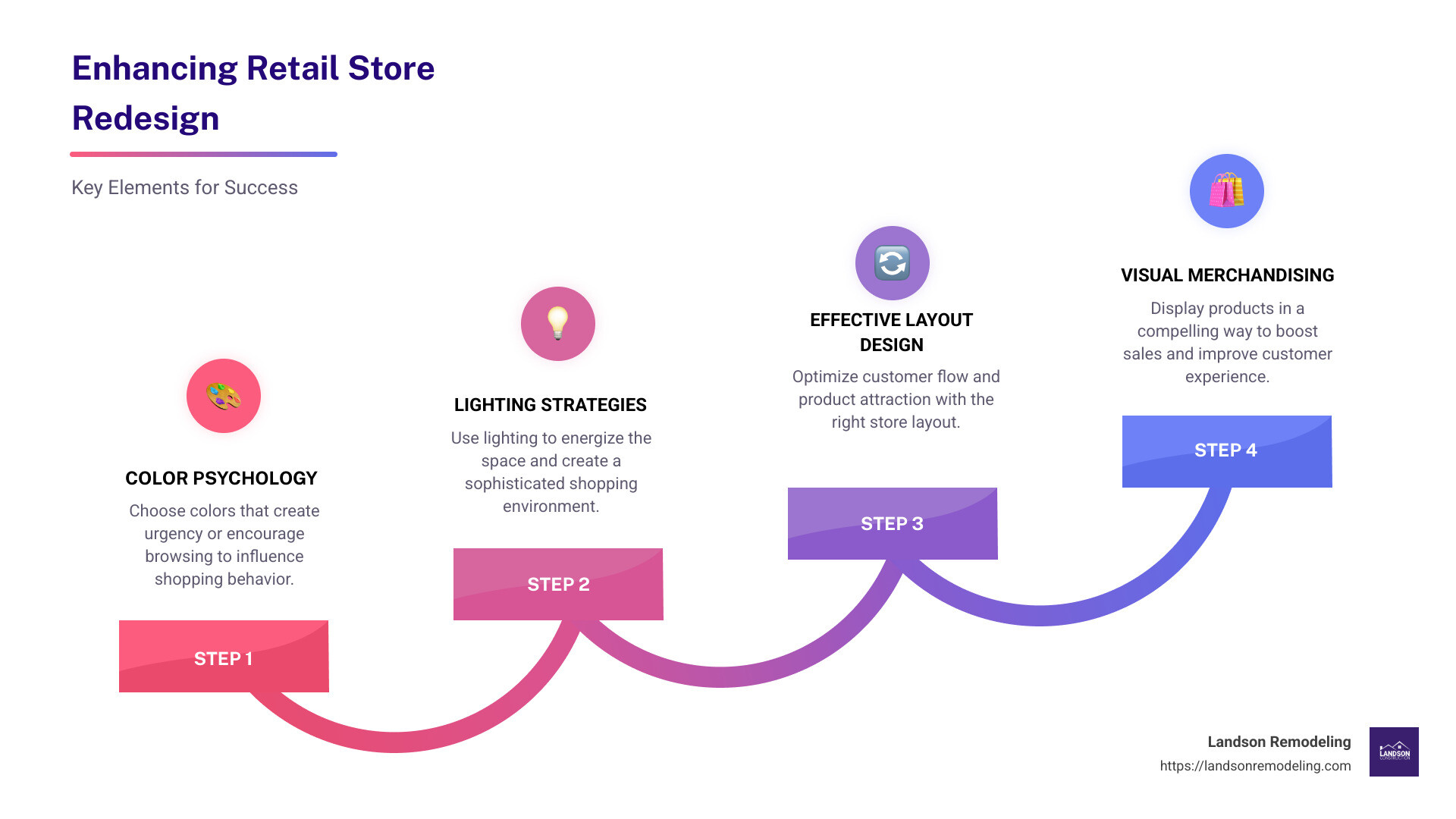
Retail store redesign is crucial for enhancing customer experience and driving sales. Here’s a quick overview of the key elements to consider:
- Color: Use warm tones to create urgency and cool colors to encourage browsing.
- Lighting: Brighten to energize and sophisticate with soft lights.
- Layout: Choose the right layout to optimize customer flow and product attraction.
The retail landscape is rapidly evolving, with billions still being spent in physical stores. Despite the rise in ecommerce, a staggering 84.4% of U.S. retail sales happen in brick-and-mortar locations. This puts immense pressure on retailers to nail their visual merchandising and store design, as a shopper’s first impression is formed within the first 90 seconds of entering.
Visual appeal directly affects purchase decisions, as 93% of buying choices are based on looks, and over half of shoppers might not return if they dislike a store’s aesthetics. Thus, investing in a compelling, well-thought-out retail design is not just beneficial—it’s essential.
Key Considerations for a Successful Store Redesign:
- Retail Store Design: Your store’s layout and appearance are your biggest sales tools.
- Customer Experience: A seamless journey through your store encourages more purchases.
- Visual Merchandising: How products are displayed can make or break a sale.
By focusing on these core elements, retailers can craft engaging, memorable shopping experiences that keep customers coming back.
Explore more about retail store redesign:
– commercial remodeling services
– office building renovations
– retail renovation companies
Selecting the Right Store Layout
Choosing the right store layout is a fundamental step in retail store redesign. It impacts how customers steer your space, interact with products, and ultimately, their purchase decisions. Let’s explore the different types of layouts and how they can transform your store.
Grid Layout
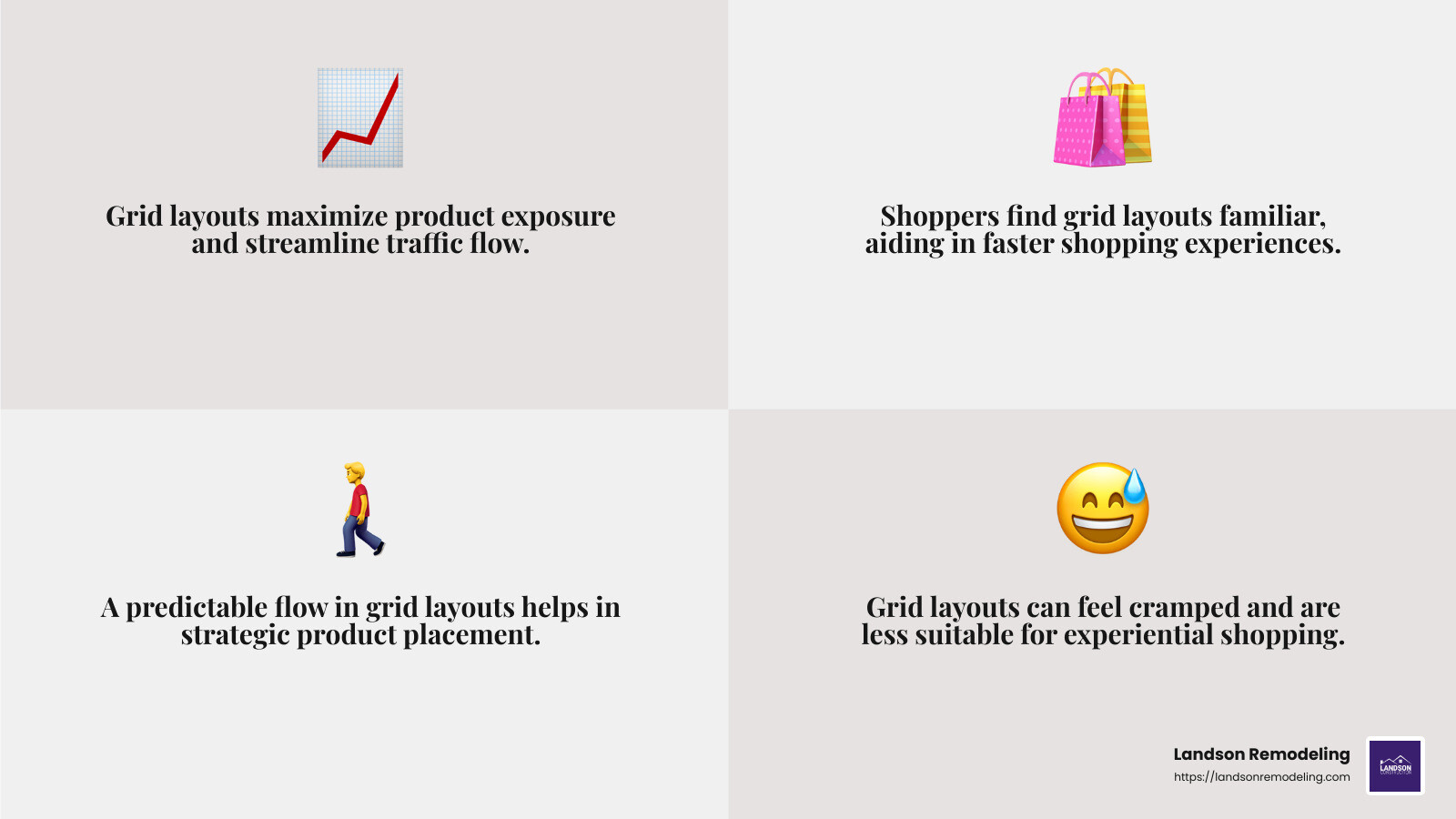
The grid layout, often seen in grocery and convenience stores, is all about efficiency. It features long aisles in a straight line, making it easy for customers to find what they need quickly.
Pros:
– Maximizes product exposure
– Predictable traffic flow helps in strategic product placement
– Familiar to most shoppers
Cons:
– Can feel cramped and overwhelming
– Not ideal for creating an experiential shopping environment
Loop Layout
Also known as the racetrack layout, this design guides customers through a predetermined path, ensuring they pass by most merchandise. It’s popular in stores like IKEA, where the journey is part of the experience.
Pros:
– Maximizes exposure to products
– Encourages browsing and impulse buys
Cons:
– Can be frustrating for customers who want to make quick purchases
Free-Flow Layout
Want to let creativity shine? The free-flow layout allows for a more relaxed shopping experience, perfect for boutique stores. It encourages exploration and findy.
Pros:
– Flexible and creative
– Encourages leisurely browsing
Cons:
– May lead to disorganized traffic flow
Diagonal Layout
The diagonal layout offers open sightlines and a dynamic flow, often used in tech and beauty stores. It combines the best of grid and free-flow designs to create a visually appealing and functional space.
Pros:
– Creates open sightlines
– Facilitates a smooth customer flow
Cons:
– Requires careful planning to avoid confusion
Forced-Path Layout
This layout, seen in furniture stores like IKEA, directs customers through the store along a single path. It ensures maximum exposure to all products.
Pros:
– Maximizes product exposure
– Encourages impulse buying
Cons:
– Can be restrictive and frustrating for some shoppers
Angular Layout
The angular layout uses curves and angles to highlight high-end products, often seen in luxury and jewelry stores. It creates an upscale, sophisticated atmosphere.
Pros:
– Highlights premium products
– Creates an exclusive feel
Cons:
– Not ideal for stores with a large variety of products
When deciding on a layout, consider your brand image, product range, and customer preferences. Combining elements from different layouts can also yield great results, creating a unique shopping experience that aligns with your store’s goals.
Next, we’ll explore how to design a blueprint for your retail store redesign, utilizing digital tools and analytics to optimize customer flow and product placement.
Designing a Blueprint for Retail Store Redesign
Creating a blueprint for your retail store redesign is a crucial step in optimizing your space for better customer experiences and improved sales. Leveraging digital tools and analytics can make this process more efficient and effective.
Digital Tools for Floor Planning
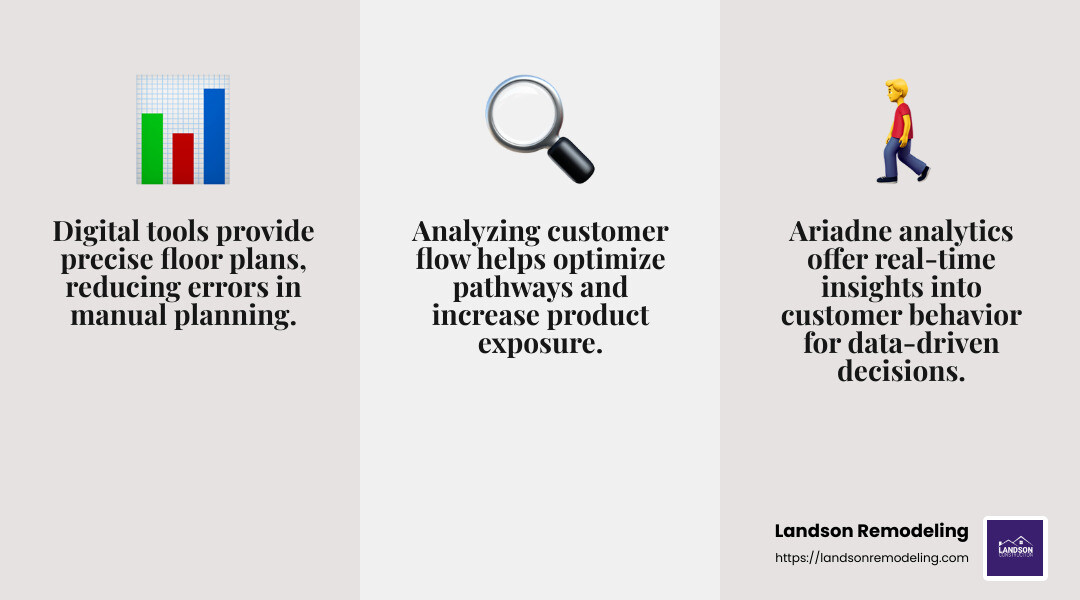
In the age of technology, designing a store layout has become more accessible and precise. Digital tools like Ariadne’s analytics solution allow you to draw and digitize your floor plan, providing a visual representation of your store layout. These tools can simulate customer flow, predict dwell times, and suggest optimal product placements.
Why use digital tools?
- Accuracy: Digital tools help create precise floor plans, reducing errors that can occur with manual planning.
- Flexibility: Easily modify layouts and instantly see the impact on customer flow and product visibility.
- Efficiency: Save time and resources by testing different layouts digitally before implementing them physically.
Understanding Customer Flow
Customer flow is the path that shoppers take as they steer through your store. Understanding this flow is essential for designing a layout that maximizes exposure to products and improves the shopping experience.
- Observe and Analyze: Use tools like time-lapse videos or foot traffic analytics to monitor how customers move through your store.
- Identify Hotspots: Determine which areas attract the most attention and which are often overlooked.
- Optimize Pathways: Ensure that pathways are clear and logical, guiding customers naturally through the store.
Leveraging Ariadne Analytics
Ariadne’s analytics solution is a powerful tool for making data-driven decisions about your store layout. It can provide insights into customer behavior, such as how many people visit specific sections and how long they dwell there.
- Compare Layouts: Test different layout configurations to see which results in higher foot traffic and longer dwell times.
- Cross-Sales Performance: Analyze transitions between sections to identify opportunities for cross-merchandising.
- Real-Time Data: Access up-to-date information to make informed decisions quickly.
Bringing It All Together
By integrating digital tools and analytics into your store redesign process, you can create a blueprint that not only looks good on paper but also performs well in reality. This approach ensures that your store layout aligns with your brand’s goals and improves the overall customer experience.
In the next section, we’ll dig into enhancing customer experiences through strategic use of color, lighting, and other elements.
Enhancing Customer Experience
Creating a memorable shopping experience goes beyond just having a visually appealing store. It’s about making customers feel comfortable and engaged. Let’s explore some key elements that can improve the customer experience in your retail store redesign.
Color Psychology
Colors have a powerful impact on emotions and behavior. Up to 90% of consumers’ first impressions are based on color, and 85% say it’s a primary reason for purchasing a product.
- Warm Colors: Reds and oranges can create urgency and excitement. Use them for sales and promotions to encourage impulse buys.
- Cool Colors: Blues and greens have a calming effect and build trust. They are perfect for areas where you want customers to linger and browse.
- Neutral Colors: Whites and grays serve as excellent backgrounds, allowing products to stand out without overwhelming the senses.
Lighting Strategies
Lighting can shape the atmosphere and influence how customers perceive your store.
- Bright Lighting: Makes the space feel vibrant and energetic. It’s ideal for stores where you want quick decisions, like fast-fashion outlets.
- Soft Lighting: Creates a cozy, exclusive feel. Luxury brands often use it to encourage customers to spend more time exploring.
- Spotlighting: Highlight specific products or areas. This can draw attention to new arrivals or high-margin items.
Size and Scale
The size of your store dictates the layout and design choices.
- Large Spaces: Can accommodate more products and displays but require clear signage to guide customers.
- Small Spaces: Benefit from minimalist layouts and smart use of vertical space to prevent overcrowding.
Comfort Zones
Comfort is key to keeping customers in your store longer.
- Seating Areas: Provide spots for resting, especially in large stores. This can also cater to non-shopping companions.
- Climate Control: Ensure the temperature is comfortable year-round. No one likes shopping in a hot or cold store.
Customer Amenities
Small touches can make a big difference in how your store is perceived.
- Refreshments: Offer water or coffee to improve the shopping experience.
- Wi-Fi Access: Free internet can keep customers connected and engaged, encouraging longer visits.
- Clean Facilities: Ensure restrooms and fitting rooms are clean and accessible.
By focusing on these elements, you can craft a shopping environment that not only attracts customers but also encourages them to return.
Next, we’ll dig into optimizing product placement and displays to maximize sales and customer satisfaction.
Optimizing Product Placement and Displays
When it comes to retail store redesign, smart product placement and engaging displays can make a huge difference. These elements not only catch the eye but also boost sales and improve the shopping experience. Let’s explore some key strategies.
Smart Product Positioning
Positioning products smartly is crucial for leading customers through your store naturally. Place your best-selling or high-margin items at eye level. This increases the chance of these products being noticed and purchased.
- Eye-Level is Buy-Level: Products at eye level are more likely to sell. Ensure that your most profitable items are in this prime spot.
- Entry Displays: Use the area near the entrance to showcase seasonal or new arrivals. This creates a strong first impression and can drive initial interest.
Cross-Merchandising
Cross-merchandising involves displaying complementary products together to encourage additional purchases. This strategy can significantly increase your average order value (AOV).
- Example: If you sell running shoes, place them near socks and athletic shorts. This not only makes shopping convenient but also inspires customers to buy more items.
- Impulse Buys: Place small, inexpensive items near checkout areas. These can tempt customers to make last-minute additions to their purchase.
Fixtures and Displays
The right fixtures and displays can transform the look and feel of your store. They should be both functional and appealing.
- Modular Fixtures: Use flexible fixtures that can be easily rearranged. This allows you to refresh your store layout regularly without significant costs.
- Interactive Displays: Incorporate digital screens or kiosks to provide additional product information or to showcase items not available in-store.
Impulse Sales
Creating opportunities for impulse sales is a clever way to boost your revenue. These are often unplanned purchases made when a customer is already in the buying mindset.
- Checkout Line Displays: Stock this area with small, enticing products like snacks or accessories. Customers waiting in line are more likely to make impulse buys.
- Speed Bumps: Use shelf stoppers or special signage to highlight certain products. This can slow down customers and encourage them to explore more options.
By strategically placing products and designing engaging displays, you can maximize sales and create a store environment that delights customers. Next, we’ll address some frequently asked questions about retail store redesign to further guide your change journey.
Frequently Asked Questions about Retail Store Redesign
How to redesign a shop?
Redesigning a shop is all about improving the customer experience and boosting sales. Here are some key store layout design tips:
-
Analyze Customer Flow: Understand how shoppers move through your store. Use tools like heat maps or simple observation to see which areas get the most traffic and which are often ignored.
-
Design for the Right Turn: Most customers naturally turn right when entering a store. Place your most attractive displays or new arrivals in this area to grab attention right away.
-
Create a Decompression Zone: This is the space just inside your entrance where customers adjust from outside to inside. Keep it free from clutter to allow them to transition smoothly.
-
Use Window Displays: A well-designed window display can draw people in. Tell a story or highlight promotions to make passersby interested in stepping inside.
What are the four main types of store layouts?
Choosing the right layout is crucial for your store’s success. Here are four common types:
-
Grid Layout: Used by grocery stores and pharmacies, this layout features long aisles for efficient shopping. It’s great for stores with a lot of products.
-
Herringbone Layout: Ideal for narrow spaces, this layout places aisles at an angle, allowing for more product exposure in small areas.
-
Loop (or Racetrack) Layout: This layout encourages customers to follow a set path through the store, ensuring they see all products. It’s popular in department stores.
-
Free-Flow Layout: This flexible layout encourages exploration. It’s perfect for boutiques or stores with unique, high-end products.
What is retail remodeling?
Retail remodeling involves updating a store’s appearance and functionality to better meet customer needs and market trends. It can include:
-
Store Updates: Refreshed fixtures, new paint, or updated lighting can make a big impact.
-
Branding: Align your store’s look with your brand’s identity. Consistent colors, signage, and design elements help reinforce your brand.
-
Functional Alterations: Improve the practicality of your space. This might involve reorganizing the sales floor, adding new technology, or improving accessibility.
By understanding these elements, you’re well on your way to a successful retail store redesign. Up next, we’ll explore how Landson Remodeling can support your journey with personalized client support and innovative 3D design services.
Conclusion
At Landson Remodeling, we believe that a well-executed retail store redesign is more than just a facelift—it’s a strategic move to improve customer experience and boost sales. Our expertise in remodeling extends beyond just aesthetics; we focus on creating spaces that are functional, inviting, and aligned with your brand’s identity.
Personalized Client Support is at the heart of what we do. We take the time to understand your unique needs and vision. Whether you’re looking to refresh your store layout or undertake a complete redesign, our team is here to guide you every step of the way. From initial consultation to final touches, we ensure that your project reflects your goals and exceeds your expectations.
Our 3D Design Services offer a glimpse into the future of your retail space. With advanced 3D modeling, you can visualize changes before they happen, allowing you to make informed decisions with confidence. This technology helps us to fine-tune every detail, from color schemes to product placement, ensuring that the end result is exactly what you envisioned.
For more information on how we can help transform your retail space, visit our services page. Let’s work together to create a store environment that not only attracts customers but keeps them coming back.


